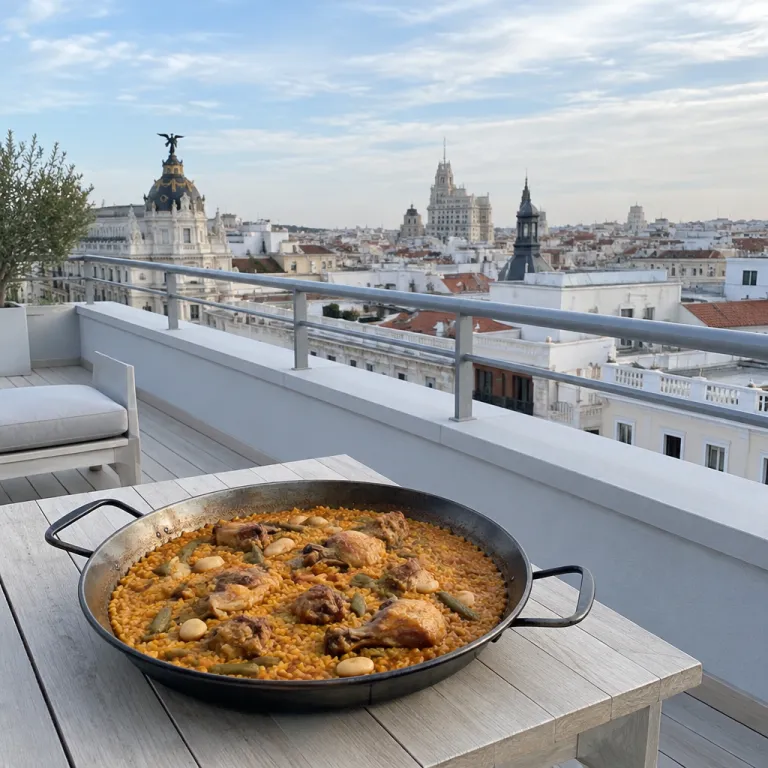
Where paella is really from and why it matters in Madrid
Anyone asking de dónde es la paella is really asking about identity and regional pride. The answer is clear: this rice dish was born in the countryside around Valencia, in eastern Spain, long before it appeared on Madrid hotel rooftops. When you book a hotel in Madrid today, your choice of terrace or restaurant access will shape how close you get to that original paella tradition and how seriously the kitchen treats Spanish rice.
The history of paella begins in the huerta and wetlands of the Valencia region, where farmers used local arroz and vegetables to create a nourishing pan of food at midday. Historical studies from Turisme Comunitat Valenciana explain that this Spanish rice preparation evolved between the late Middle Ages and the early Modern era, when rice cultivation expanded and families gathered around a wide paella pan over an open fire. Food historians such as Lourdes March (Paella, 1993) and the Denominación de Origen Arroz de Valencia describe how this rural dish later travelled across Spain, and Madrid became the capital where regional rice dishes, including paella valenciana and seafood paella, are reinterpreted for urban diners and hotel guests.
Understanding that paella is from Valencia, not Madrid, helps you judge every rice dish you see on a rooftop menu. In its most traditional form, authentic paella from the Valencia region uses short-grain bomba rice, olive oil, saffron, green beans, and a mix of rabbit and chicken rather than seafood. When you read a hotel menu in Madrid, look for references to paella valenciana or arroz valenciano, and ask whether the paella cooked in that kitchen respects these original ingredients and cooking methods or presents a more creative mixed paella aimed at visitors.
From valencian fields to Madrid rooftops ; how paella evolved
To understand de dónde es la paella while staying in Madrid, picture the Albufera lagoon south of Valencia. Farmers there once cooked a single pan of arroz with vegetables, beans, chicken, and rabbit over an open fire, using whatever food the land provided that day. That humble rural dish slowly became paella valenciana, the benchmark against which many other Spanish rice dishes are still measured and the reference point for chefs in Madrid who care about authenticity.
The word itself tells part of the story; ¿De dónde viene la palabra paella? Viene del valenciano paella, que significa sartén, del latín patella. Over time, this Valencian pan of rice, chicken, and rabbit inspired countless mixed paella and seafood paella variations, especially as coastal towns added shellfish and inland cooks experimented with different vegetables and beans. When the dish reached Madrid, chefs began serving both the original Valencian style and more cosmopolitan recipes that combine seafood, meat, and seasonal vegetables on hotel terraces with skyline views, often pairing them with Spanish wine lists and tasting menus.
As you compare hotel restaurants, notice how they describe their Spanish cuisine and rice dishes on the menu. Some kitchens in Madrid focus on an authentic paella valenciana, using bomba rice and green beans sourced from the Valencia region, while others highlight seafood paella as a luxurious rooftop dish paired with chilled white wine. For a curated list of places where the paella cooked in Madrid comes closest to the Valencian original, consult this detailed guide to where to eat paella in Madrid and which neighbourhoods to explore.
Choosing a Madrid hotel when paella and rooftop dining are priorities
If you care about de dónde es la paella, you probably care where you eat it in Madrid. The best hotel for you will combine a serious approach to Spanish cuisine with access to rooftops or nearby restaurants that respect the dish’s Valencian roots. Before booking, check whether the property’s restaurant team mentions authentic paella, bomba rice, or a paella pan cooked over an open fire, even if that fire is now gas or induction, and whether the chef has experience with regional rice dishes.
Location matters because Madrid’s neighbourhoods offer very different food experiences and rice dishes. Around Plaza Mayor and La Latina, many venues serve large mixed paella pans aimed at tourists, often with generous seafood but fewer traditional ingredients like rabbit and chicken or local green beans. In contrast, areas such as Chamberí, Salamanca, and parts of Retiro host restaurants that treat Spanish rice and arroz valenciano with more care, sometimes collaborating with suppliers from the Valencia region for vegetables and beans and listing specific producers on the menu.
If you follow a mostly plant-based diet but still want to explore the history of paella, choose a hotel near serious vegetarian-friendly restaurants that reinterpret the rice dish with seasonal vegetables. Some kitchens now offer vegetable-forward rice dishes that echo the original farmer’s pan of arroz and vegetables, even when they omit chicken or seafood. For help aligning your hotel choice with high-quality vegetarian and vegan Spanish cuisine, use this specialist guide on how to choose a Madrid hotel near excellent plant based restaurants.
What an authentic paella experience should look like from Madrid
Once you know de dónde es la paella, you can recognise when a Madrid rooftop respects that origin. An authentic paella experience starts with the right rice base: short-grain bomba rice spread thinly in a wide paella pan so the grains cook evenly. The best Spanish rice dishes in the city aim for socarrat, the caramelised layer at the bottom that forms when paella is cooked slowly over an open fire or carefully controlled burner, a detail emphasised by chefs such as Quique Dacosta in his 2015 book on Valencian rice.
In the Valencian tradition, paella valenciana is defined by its ingredients and proportions rather than by spectacle. Expect arroz valenciano combinations of rice, chicken, rabbit, green beans, sometimes snails, and a base of olive oil, tomato, and paprika, with just enough stock to cook the rice without turning the dish into soup. Seafood paella and mixed paella, popular on many Madrid hotel terraces, replace or complement the meat with prawns, mussels, squid, and other shellfish, yet they should still respect the balance between rice, stock, and vegetables and avoid overwhelming the arroz with toppings.
From a rooftop table, you should see the entire pan arrive at once, not individual plated dishes that hide the rice. Ask your server how long the paella cooked, because a proper rice dish usually requires at least twenty minutes from order to table, sometimes longer for larger pans. If a hotel restaurant offers instant paella in five minutes, you are likely getting reheated food rather than the kind of Spanish cuisine that honours the story paella carries from the Valencia region to Madrid and the care that traditional recipes demand.
Rooftop gastronomy in Madrid ; pairing skyline views with regional rice dishes
Madrid’s skyline has become a stage where regional Spanish dishes, including paella, compete for attention. When you book a room with rooftop access, you are also choosing the setting in which you will taste Spanish rice, seafood paella, or arroz valenciano while watching the sun set behind the Royal Palace. The most interesting rooftops treat food as seriously as the view, turning each paella pan into a quiet lesson on de dónde es la paella and how it should be cooked according to Valencian tradition.
Some hotel rooftops lean into the coastal fantasy, serving seafood-heavy mixed paella with prawns, clams, and squid, often alongside other rice dishes inspired by Spanish cuisine from Andalusia or Galicia. Others highlight the Valencian origin more explicitly, listing paella valenciana by name and explaining that the original dish used chicken, rabbit, beans, and vegetables from the huerta around the Valencia region. When a menu mentions bomba rice, olive oil from specific Spanish denominations, and a paella cooked to order, you are usually in capable hands and can expect a more thoughtful approach to regional gastronomy.
To plan a stay that balances gastronomy, neighbourhood character, and rooftop access, consider using this curated itinerary for an elegant first visit to Madrid with refined places to stay and eat. It can help you match your hotel choice with nearby restaurants that respect the history paella carries from Valencia while still embracing Madrid’s cosmopolitan energy. That way, every rice dish you order, whether seafood paella or a more traditional arroz valenciano, becomes part of a coherent travel experience rather than a random meal.
How to read Madrid menus when you care about paella’s origin
Understanding de dónde es la paella gives you a practical advantage when reading Madrid hotel menus. Instead of choosing the most photogenic pan, you can evaluate each rice dish by its ingredients, cooking method, and reference to the Valencian tradition. This approach turns every rooftop dinner into a small act of culinary due diligence and helps you distinguish between authentic paella and generic tourist fare.
Start by checking whether the menu distinguishes between paella valenciana, seafood paella, and mixed paella, because serious kitchens respect those categories. A clear description of arroz valenciano should mention chicken, rabbit, green beans, sometimes other beans, and vegetables, all cooked in olive oil with saffron or similar colouring, ideally using bomba rice from the Valencia region. When a restaurant lists only generic “Spanish rice” without details, you may be looking at a simplified dish designed more for speed than for authenticity and regional character.
Do not hesitate to ask how the paella is cooked and whether the kitchen uses a proper paella pan over an open fire or powerful gas burners. In many Madrid hotels, fire regulations prevent true wood burning, yet skilled chefs can still achieve excellent results with careful control of heat and stock. By asking these questions politely, you signal that you understand the history paella carries from Valencia to Madrid, and you increase your chances of enjoying food that honours both the original farmers’ dish and the modern city skyline.
Key figures and cultural context about paella and Madrid dining
- Surveys by Spain’s Centro de Investigaciones Sociológicas (CIS) consistently show that many respondents identify paella as a central symbol of Spanish cuisine, which helps explain why so many Madrid hotels highlight rice dishes on their rooftop menus.
- The Albufera and surrounding huerta near Valencia sit roughly 350 km from Madrid, meaning that every authentic paella valenciana served in the capital depends on supply chains that can deliver quality rice, vegetables, and olive oil from the Valencia region.
- Historical timelines from Denominación de Origen Arroz de Valencia place the consolidation of paella as a distinct rice dish between the fifteenth and nineteenth centuries, a period when rice cultivation expanded in eastern Spain and the dish gradually travelled inland to cities such as Madrid.
- Traditional methods emphasise cooking paella over an open fire in a wide paella pan, a technique that modern Madrid hotel kitchens often emulate with specialised burners to recreate the socarrat and texture associated with authentic paella.
FAQ about paella origins and eating it in Madrid hotels
Where is paella originally from and how does that affect Madrid dining?
Paella is originally from the rural areas around Valencia, especially the Albufera lagoon and surrounding huerta, where farmers cooked rice with local vegetables, beans, chicken, and rabbit in a wide pan over an open fire. Knowing that de dónde es la paella is the Valencia region helps you judge Madrid hotel menus, because the closer a rice dish stays to that Valencian template, the more authentic it is. In Madrid, you will find both faithful paella valenciana and more creative mixed paella or seafood paella on rooftop terraces, often adapted to international tastes.
What are the traditional ingredients of paella valenciana?
The classic Valencian version uses short-grain rice, usually bomba rice, cooked in olive oil with chicken, rabbit, green beans, sometimes other beans, tomatoes, and often snails, all seasoned with saffron or similar colouring. As the Denominación de Origen Arroz de Valencia summarises: ¿Cuáles son los ingredientes tradicionales de la paella valenciana? Arroz, pollo, conejo, verduras autóctonas, azafrán y aceite de oliva. When a Madrid hotel restaurant lists these ingredients clearly, you can be confident that its arroz valenciano respects the original dish and not just a generic Spanish rice recipe.
How can I tell if a Madrid hotel serves authentic paella?
Look for menus that name paella valenciana separately from seafood paella and mixed paella, and that specify bomba rice, olive oil, and a cooking time of at least twenty minutes. Ask whether the paella cooked in the kitchen uses a proper paella pan and whether the stock is prepared in house rather than from industrial bases. Hotels that highlight the Valencia region as the origin and explain the story paella carries into their Spanish cuisine usually take the dish seriously and invest in better ingredients.
Is seafood paella traditional or a modern Madrid invention?
Seafood paella developed along the Spanish coast as a variation on the inland Valencian rice dish, using prawns, mussels, and other seafood instead of rabbit and chicken. It is not the original farmer’s dish from the huerta, but it has become a respected style within broader Spanish rice dishes. Madrid hotels often feature seafood paella on rooftops because it pairs well with the city’s cosmopolitan image and access to high-quality fish and shellfish from across Spain.
Should I leave Madrid to taste the best paella, or can I stay in the city?
Travelling to the Valencia region, especially villages near the Albufera, offers the most direct connection to de dónde es la paella and to the traditional way paella is cooked over an open fire. However, Madrid now hosts several restaurants and hotel rooftops that collaborate with Valencian suppliers and respect the original ingredients, including bomba rice, green beans, and quality olive oil. If you choose your hotel carefully and read menus with an informed eye, you can enjoy excellent rice dishes in the capital while still planning a future trip to Valencia for a deeper dive into regional gastronomy.
References
- Centro de Investigaciones Sociológicas (CIS) – national surveys on Spanish food culture and identity.
- Denominación de Origen Arroz de Valencia – regulatory council for rice production in the Valencia region.
- Turisme Comunitat Valenciana – official tourism information on Albufera, huerta, and regional gastronomy.